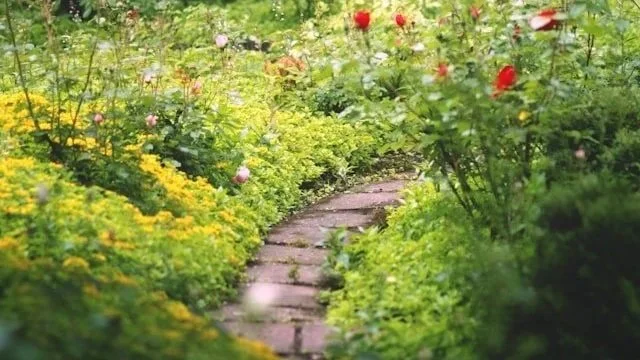
The basics of starting your outdoor planting space
When building a new home, not only are you tasked with selecting design and décor, you also have an outdoor canvas to create. A beautiful outdoor space takes time, effort, and money.
Creating a plan is the best approach to help save money, complete the space in a timely manner, and provide enjoyment throughout the process. Let’s get started!
To get started, I suggest you first figure out what you envision for this area and identify what you already have to work with. I recommend beginning by drawing a map of the yard to note existing features such as trees, shrubs, and grass.
Next, identify which areas receive full sun versus those that are shaded, as this will determine which plants can survive in specific spots. Also, mark where we would like to have paths, whether they consist of grass, stones, pavers, or other materials.
Another key component is the location of the water sources. You need to decide if you’ll be installing an irrigation system or if you will need to access water directly from the house.
Once these details are outlined, you can move forward with deciding on specific features, such as:
- Whether you want a low-maintenance space
- An area specifically for relaxation
- The inclusion of a vegetable garden
After you’ve created a map that includes these decisions, you can then look into establishing a budget. Landscaping can be quite expensive but don’t feel that you have to make it perfect the first year. A true landscape takes time to establish but it will eventually turn out just as you envisioned. Take a little time, enjoy the process, and watch it grow! Next, let’s choose your plants.
When choosing plants, trees, and shrubs, please consider their height and width at maturity. This is super important for allowing adequate spacing for plants to thrive. I recommend doing some research to find out which plants grow best in your particular region. Additionally, I suggest leaning towards using more native plants, as they’re already acclimated to the area and will require less overall care. Your local Cooperative Extension or Department of Agriculture can provide excellent resources on the best plants/trees for your region/zone. Now, the fun part begins! Preparation!
As you begin prepping your soil, I recommend reaching out to your local Cooperative Extension to have your soil tested; this will ensure it has an abundance of the required nutrients for your specific plants or crops. Often, they will provide this testing for free. In many cases, especially with new construction where the topsoil may have been stripped away, your soil will likely need a boost. The solution is often simple; add organic matter. Add a 2-3 inch layer of compost, dry grass clippings or decayed leaves to the soil when you till a new bed.
Once the area is ready, you can start by placing the plants in their pots around the area you’ve mapped out. This is a great time to experiment with the layout; if you don’t like the placement, you can simply move them around until it is to your liking.
When you are ready to plant, please follow these steps:
- Remove and Prep: Remove the plants from their containers by pushing from the bottom. If the roots have grown into a tight ball, use your fingers to gently untangle them before setting the plant into the hole.
- Planting: Pat the soil into place around the roots and then soak the soil thoroughly with water.
- Maintenance: Water the plants regularly for the first couple of weeks. This will depend on the season, humidity, and rainfall. If you are unsure if they need water, feel the soil 3 to 4 inches below the surface. If it feels dry, it is time to water.
- Timing: I recommend watering in the early morning to help minimize evaporation.
Protect your valuable plants by using mulch. Mulch helps keep weeds out and moisture in. I suggest an organic mulch, such as a bark or leaves, or compost. This will nourish your soil as it decomposes. As your garden begins to grow, so will the weeds. Pull weeds often so they don’t take over the area where the plants are needing to expand and thrive. Get rid of dead or dying parts of flowers and shrubs while keeping an eye out for any destructive insects. You can control this by simply picking the insects off or spraying an insecticidal soap on the plant. This type of product can be found at your local garden center.
I hope this information helped you feel a little more confident in starting the outdoor space at your new home.
These are simply the basics, but there is so much information available regarding particular trees, plants, and even starting a vegetable garden to grow your own food. Remember, plants only develop from generous and consistent care.